
- You are here:
- Home »
- Kitchen Tips »
- Why Air Fryers Start Smelling Over Time
Why Air Fryers Start Smelling Over Time
As an Amazon Associate I earn from qualifying purchases.
It’s easy to ignore at first. A faint smell after cooking, maybe a slightly oily scent that lingers longer than it used to. But over time, that smell becomes stronger — sharper, heavier, and harder to ignore.
If your air fryer has started smelling different than it did when it was new, it usually isn’t a defect. Most odor issues build gradually from heat, grease vapor, and small amounts of residue that settle inside the appliance.
This guide explains why air fryers start smelling over time, what those smells actually mean, and how to reset and prevent odor safely without damaging the appliance.
In this guide
Not All Smells Mean Something Is Broken
An air fryer doesn’t operate odor-free. During the first few uses, it’s common to notice a faint warm or slightly plastic-like smell as factory residues burn off. That scent usually fades quickly and does not return.
Later on, the smell changes character. Instead of a light “new appliance” scent, it becomes heavier and more food-related — often described as old oil, stale grease, or something slightly burnt.
A faint warm smell during early use is normal. Strong or lingering odors that return after every cook cycle are usually linked to residue buildup.
The difference matters. New appliance smells fade with time. Residue-based smells intensify with time. Recognizing which one you’re dealing with helps determine whether the solution is patience or proper cleaning.
In most cases, persistent air fryer odors are not caused by electrical failure or internal damage. They’re caused by something much simpler — repeated exposure to oil and heat.
The Real Cause Is Usually Trapped Grease
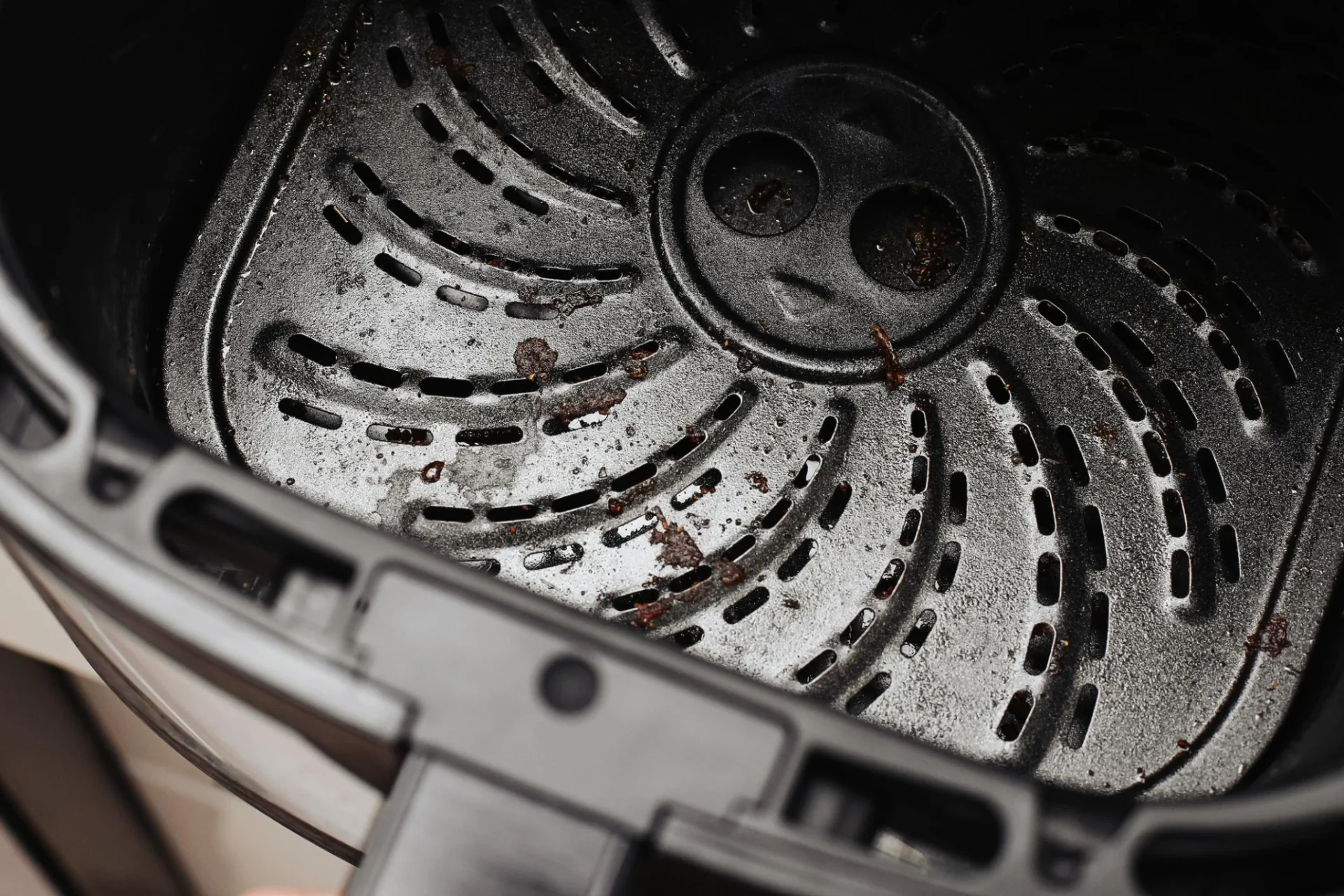
When food cooks in an air fryer, oil doesn’t just stay on the surface of the basket. Heat turns small amounts of fat into vapor. That vapor rises, cools, and settles in places you don’t normally see.
Where the Grease Actually Goes
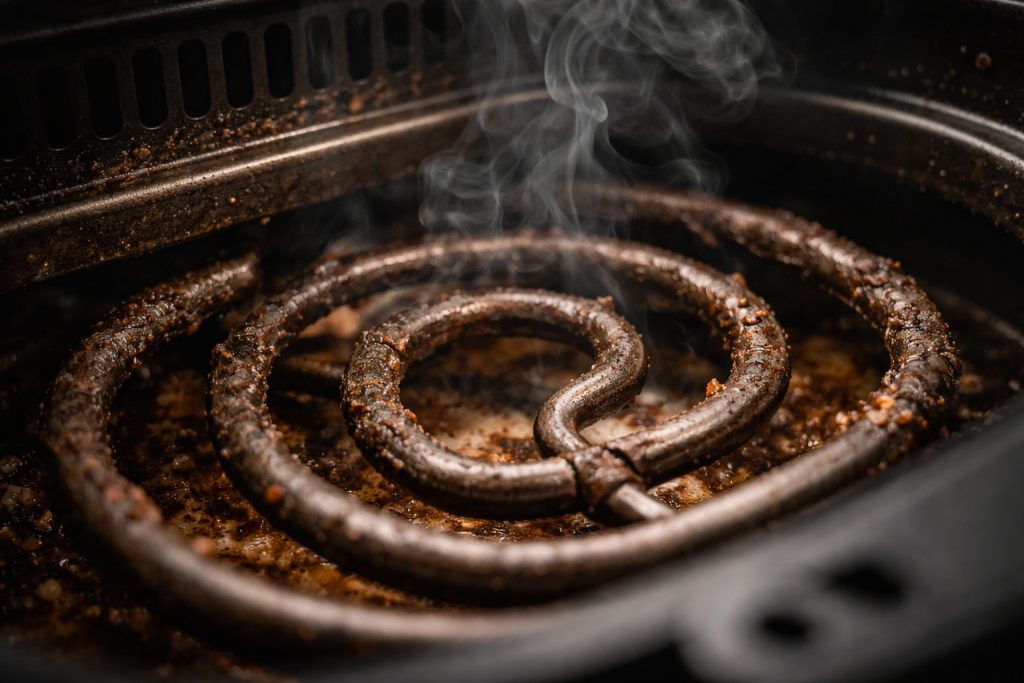
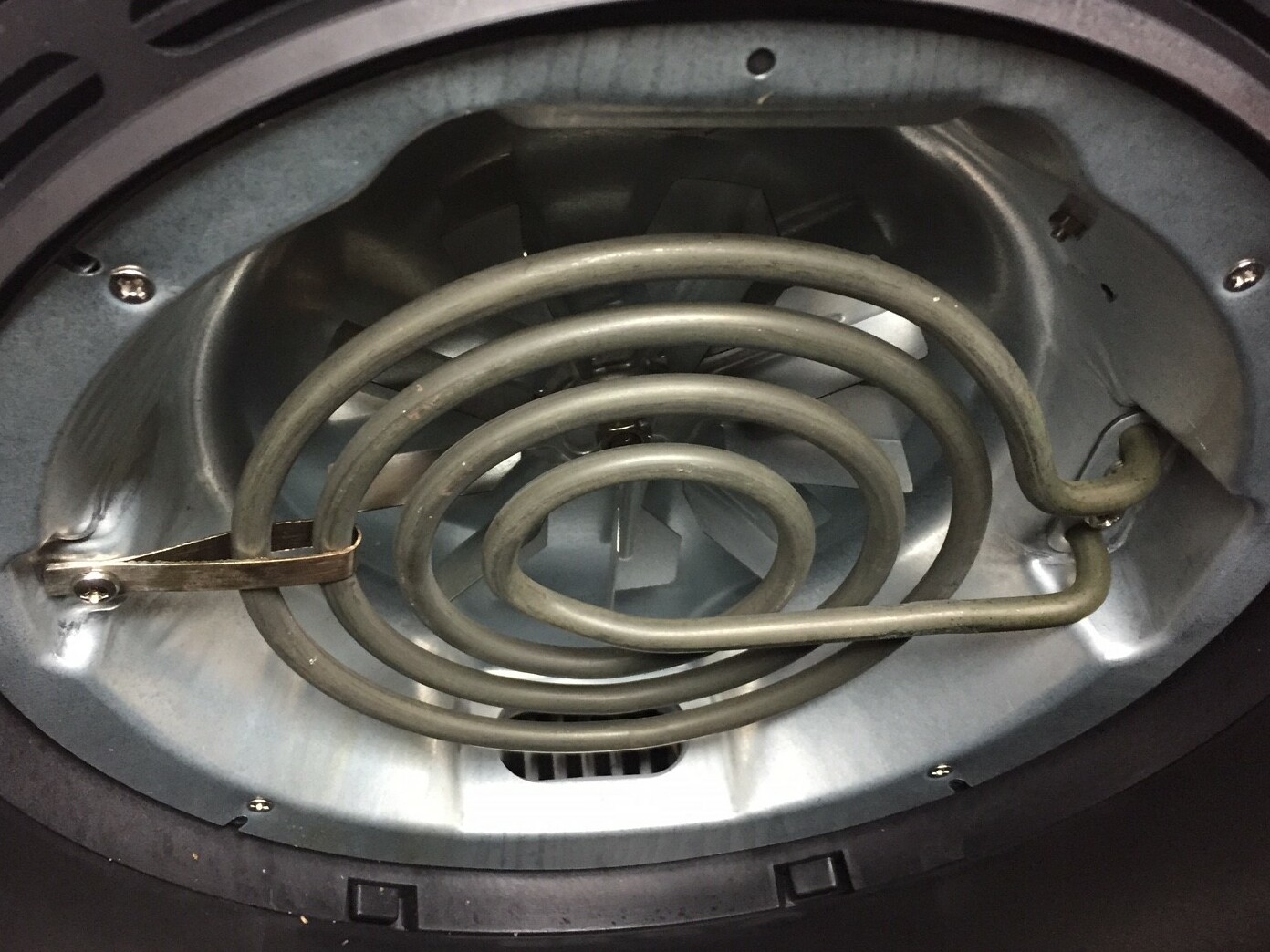
Instead of collecting only at the bottom, grease particles travel upward toward the heating element and fan housing. Over time, a thin film forms above the basket and along interior surfaces.
Each time the air fryer runs, that old residue reheats. What you smell is not today’s food — it’s yesterday’s oil being warmed again.
Why Heat Makes Old Residue Worse
Repeated heating changes the chemical structure of oil. It thickens, darkens, and develops a stronger smell over time. This process is gradual, which is why odor problems often appear months after regular use.
If cleaning has only focused on the basket and tray, deeper buildup may remain untouched. A more thorough approach is explained in our guide on how to clean your air fryer, which covers areas above and around the heating chamber.
Why Smells Get Worse Even If You Wipe It Down
It’s common to wipe the basket and tray after cooking and assume the appliance is clean. Visually, it may look spotless. But odor doesn’t always come from what you can see.
Surface cleaning removes loose oil and crumbs, but vaporized grease often settles above the basket — near the heating element, along the upper interior walls, and inside airflow channels.
When those hidden areas are reheated, the smell intensifies. Because the residue is thin and spread out, it’s easy to miss during routine cleaning.
This is why odor problems often return quickly after a simple wipe-down. Long-term grease accumulation behaves differently than fresh spills. A deeper look at how grease builds up in kitchen appliances can help explain why smells linger, especially in high-heat environments like air fryers. Our guide on cleaning grease from kitchen appliances breaks down how buildup forms over time.
If the smell returns within one or two uses after cleaning the basket, the residue is likely sitting above the cooking chamber rather than inside it.
When Smell Starts Affecting Cooking Performance
Odor buildup doesn’t just affect how your kitchen smells. In some cases, it can begin to influence how your air fryer cooks.
Grease residue near the heating element can slightly interfere with heat transfer. While the difference may not be dramatic at first, airflow patterns can become less efficient over time.
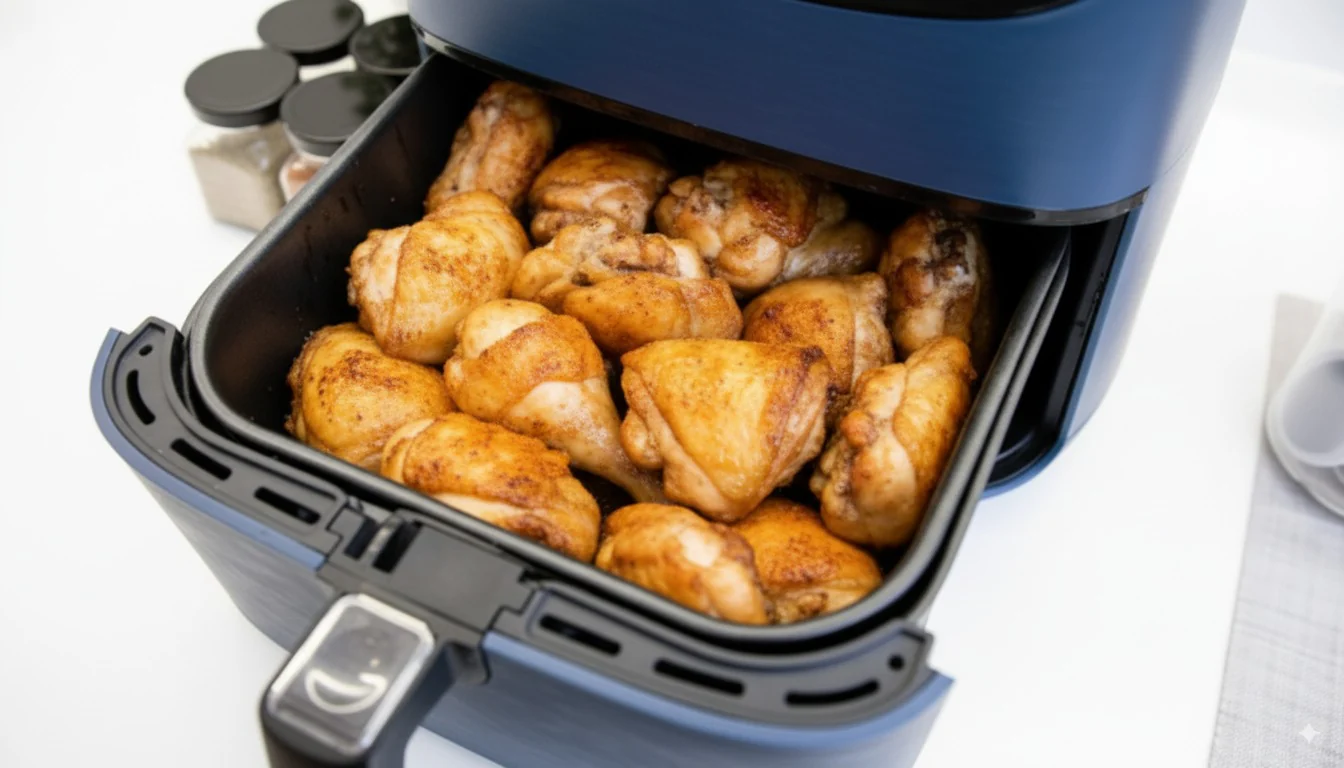
If you’ve noticed food browning inconsistently or taking slightly longer to cook, trapped grease may be affecting internal circulation. This doesn’t always happen, but when odor and uneven cooking appear together, they often share the same cause.
A detailed explanation of how airflow disruption leads to inconsistent results is covered in our guide on why food cooks unevenly in an air fryer, which breaks down the connection between airflow and heat distribution.
Odors That Mean You Should Stop Using It
If you notice a strong electrical, burning plastic, or sharp chemical smell, unplug the air fryer immediately. These odors are not caused by food residue and may indicate wiring or internal component issues.
Grease-related smells usually resemble old oil, stale food, or something mildly burnt. They tend to build gradually and intensify over time.
Electrical or plastic odors are different. They are sharper, harsher, and often appear suddenly. In some cases, they may be accompanied by visible smoke or flickering displays.
If the smell is metallic, acrid, or continues even when the basket is empty and clean, the issue is unlikely to be grease. Continuing to operate the appliance in that condition is not recommended.
When in doubt, allow the unit to cool completely, inspect the interior for visible damage, and avoid running additional cycles until the source of the smell is clear.
How to Reset the Smell Safely
Once you’ve confirmed the odor is residue-related and not electrical, the solution usually involves a deeper cleaning cycle rather than repeated short wipe-downs.
Deep Clean the Interior Surfaces
Remove the basket and tray and clean them thoroughly. Then carefully wipe the upper interior walls, heating area (once fully cool), and visible fan housing. Focus on the areas above the basket where grease vapor tends to settle over time.
Take your time with this step. Odor-causing residue is often thin and spread out, which makes it easy to miss during quick cleaning routines.
Run a Gentle Vinegar Steam Cycle
Place a small heat-safe bowl with a mixture of water and white vinegar inside the basket and run the air fryer for a few minutes at a moderate temperature. The steam can help loosen lingering odor particles.
Allow Complete Air Drying
After cleaning, leave the basket removed and allow the appliance to air out completely. Trapped moisture can mix with old residue and create new odors if the unit is stored closed while damp.
Once the smell has cleared, small habits can prevent it from returning. Simple tools like silicone liners or easy-clean inserts can help reduce grease spread, and you can explore smart kitchen tools that make cleanup easier in our guide to must-have kitchen gadgets.
A Simple Prevention Routine
Odor problems rarely appear overnight. They build gradually, which means prevention doesn’t require dramatic effort — just consistent small habits.
After Every Use
Remove crumbs and wipe visible oil while the basket is still slightly warm (but not hot). Light residue is much easier to remove before it hardens.
Weekly
Inspect the upper interior area above the basket. Even if it looks clean, a quick wipe can prevent thin oil films from thickening over time.
Monthly
Perform a deeper clean that includes the heating area and airflow chamber. This prevents repeated reheating of old residue, which is the main source of long-term odor.
Heat magnifies small residue problems. Regular light cleaning prevents strong odor buildup later.
When these small steps become routine, your air fryer stays neutral-smelling and performs consistently without the need for frequent deep resets.
FAQs
Why does my air fryer smell like old oil?
Over time, small amounts of grease vapor settle inside the air fryer and reheating that residue produces a stale or oily smell. This usually happens when buildup collects near the heating element or upper interior surfaces.
Is a burnt smell from an air fryer normal?
A mild warm smell can be normal during early use, but a strong burnt odor that returns repeatedly often signals trapped grease. If the smell is sharp, electrical, or chemical, stop using the appliance and inspect it before running another cycle.
Can air fryer smells affect the taste of food?
Yes, heavy residue buildup can slightly affect flavor. Reheated grease particles can circulate during cooking and subtly transfer odor to food, especially at higher temperatures.
How often should I deep clean my air fryer to prevent odors?
Light cleaning after each use is ideal, with a deeper clean once a month for regular users. If you cook fatty foods frequently, you may need to clean the upper interior area more often.
Do foil or parchment liners cause smells?
Liners themselves don’t usually cause odor, but they can trap grease underneath if not removed and cleaned properly. Residue buildup beneath liners can contribute to lingering smells over time.
Amazon and the Amazon logo are trademarks of Amazon.com, Inc, or its affiliates.

