

- You are here:
- Home »
- Home Articles »
- Blender Turns On but Doesn’t Blend
Blender Turns On but Doesn’t Blend

As an Amazon Associate I earn from qualifying purchases.
You press the button, the blender sounds normal, and the motor spins — but the ingredients inside barely move.
At first, it feels confusing. If it’s running, shouldn’t it be blending?
When a blender turns on but doesn’t blend, the problem is rarely electrical.
In most cases, power is reaching the motor just fine.
What’s missing is the connection between that power and the blades that actually do the work.

In this guide
Why the Blender Runs but Doesn’t Blend
One of the easiest ways to misdiagnose this problem is to focus on the sound.
If the blender is humming smoothly, many people assume the motor must be fine — and stop checking there.
What actually matters is resistance.
A working blender doesn’t just make noise; it strains slightly as it pushes ingredients against the blades.
When that resistance disappears, the motor can spin freely without doing any real work.
In practical terms, this means the motor is no longer transferring its motion effectively.
The blades may be slipping, partially blocked, or disconnected from the drive system entirely.
From the outside, everything looks normal — but internally, the chain of movement has been interrupted.
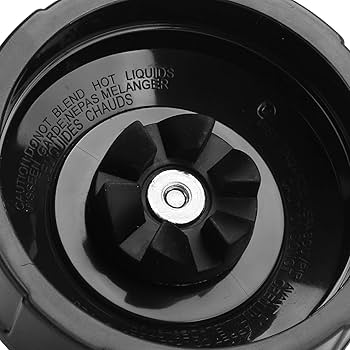
This is why running the blender longer rarely helps.
Without proper contact between internal parts, more time only increases wear — it doesn’t restore blending power.
The Most Common Mechanical Causes
When a blender runs without blending, it’s tempting to search for a single broken part.
In reality, several different mechanical issues can produce the same symptom.
The key is understanding how motion is supposed to travel through the appliance — and where it commonly breaks down.
One of the most frequent causes is wear at the point where the motor meets the blade assembly.
This connection absorbs constant stress, especially during thick blends or dry starts.
Over time, even small amounts of wear can reduce how much motion actually reaches the blades.
Another common issue is resistance inside the jar itself.
If the blade assembly is partially blocked by residue or hardened food, the motor may still spin, but the blades struggle to move freely.
From the outside, this often looks like a complete loss of blending power.
Overloading can also play a role.
Dense ingredients packed tightly against the blades increase torque demands.
If this happens repeatedly, internal components begin slipping long before the blender fully fails.
What makes these problems tricky is that they don’t always appear suddenly.
Performance often fades gradually, until one day the blender sounds normal — but stops doing its job.
How to Fix a Blender That Won’t Blend
Before assuming anything is permanently damaged, start with a simple physical check.
Always unplug the blender first, then try turning the blades by hand from inside the jar.
If the blades move smoothly and freely, the issue may lie lower in the drive system.
If they feel stiff, gritty, or uneven, buildup beneath the blade assembly is often the cause.
This resistance alone can prevent proper blending even when the motor is running.
In cases where residue has hardened below the blades, a surface rinse won’t be enough.
The assembly usually needs to be removed and cleaned thoroughly before motion can be restored.
This step-by-step guide shows how to safely remove buildup without damaging seals or bearings:
How to Deep Clean a Blender
How to Deep Clean a Blender
Once cleaned, recheck blade movement by hand before reassembling.
If resistance is gone and the blades spin freely, blending performance often returns immediately.
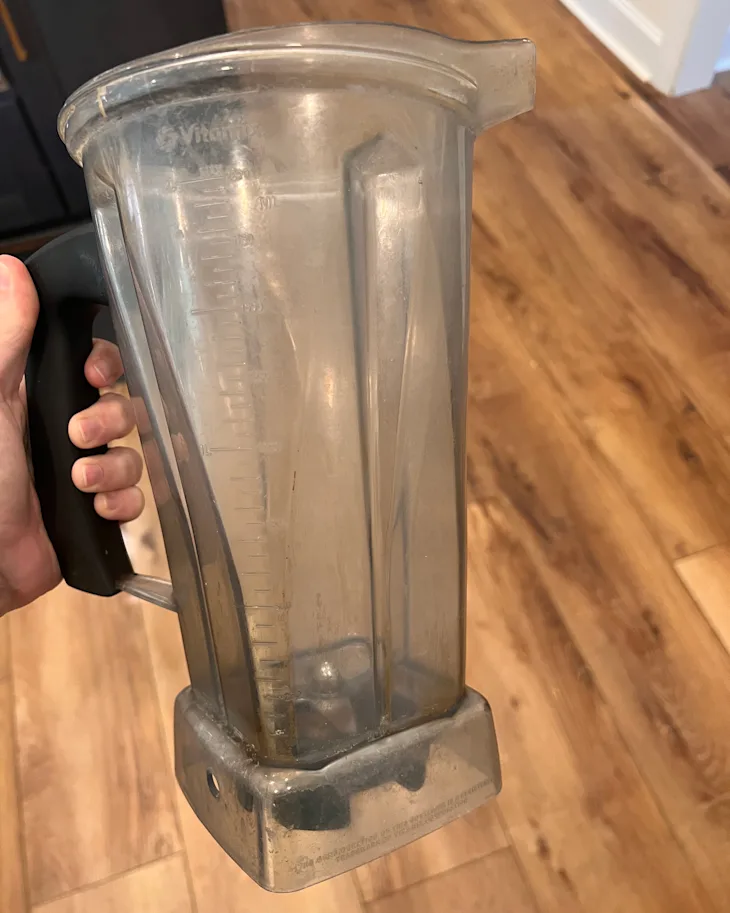
If the blades spin easily by hand but still fail to move during operation, internal wear is more likely.
At that point, continued use usually causes more damage rather than improvement.
How to Prevent This Problem
Most blending failures don’t come from a single mistake.
They develop slowly, shaped by how the blender is used day after day.
That’s why prevention is less about one rule and more about small habits adding up.
Ingredient order makes a bigger difference than many people realize.
Starting with liquid creates movement early, reducing stress on the blades and the drive system.
Dry ingredients pressed directly against stationary blades are far more likely to cause internal strain.
Timing matters too.
Letting residue sit beneath the blade assembly gives it time to harden, increasing resistance during the next use.
A quick rinse immediately after blending is often enough to prevent that buildup from forming in the first place.
Simple care routines can significantly extend blending performance over time:
Blender Maintenance Tips
Blender Maintenance Tips
None of these habits are complicated.
They just reduce how hard the internal components have to work — which is usually what keeps blending problems from returning.

When Replacement Makes More Sense
Not every blender is worth repairing.
When mechanical issues return repeatedly, the question shifts from “Can this be fixed?” to “Is this still practical?”
If the blades spin freely by hand but fail to engage during operation, internal wear is usually advanced.
Replacing individual components may temporarily restore function, but performance often declines again under normal use.
This is especially true in households that blend dense or frozen ingredients regularly.
Tasks like nut butters, ice-heavy smoothies, or thick sauces place sustained demands on the drive system that basic models aren’t designed to handle long-term.
In those situations, choosing a blender built for consistent torque and heavier loads can be more reliable than ongoing repairs.
For readers who regularly blend dense or frozen ingredients, comparing blenders designed for smoother, more consistent blending can help clarify whether an upgrade would reduce ongoing strain and repeat issues.
Replacement isn’t a failure — it’s often a recognition that usage has outgrown the appliance.
Frequently Asked Questions
Can a blender sound normal even if it isn’t blending?
Yes. When internal parts slip or fail to engage, the motor can run smoothly without transferring motion to the blades.
This often makes the problem harder to diagnose at first.
Is it safe to keep running the blender to see if it starts blending?
No. Continuing to run a blender that isn’t blending can accelerate internal wear.
If motion isn’t transferring properly, more runtime usually causes damage rather than fixing anything.
Does this problem mean the motor is failing?
In most cases, no. The motor is often still functional.
The issue is usually mechanical, involving worn connections or resistance around the blade assembly.
Can cleaning really restore blending performance?
Yes, if buildup is the cause. Hardened residue beneath the blades can block movement entirely.
Removing that resistance often restores normal operation immediately.
Amazon and the Amazon logo are trademarks of Amazon.com, Inc, or its affiliates.