
- You are here:
- Home »
- Home Articles »
- 12 Common Air Fryer Mistakes to Avoid (And How to Fix Them)
12 Common Air Fryer Mistakes to Avoid (And How to Fix Them)
As an Amazon Associate I earn from qualifying purchases.
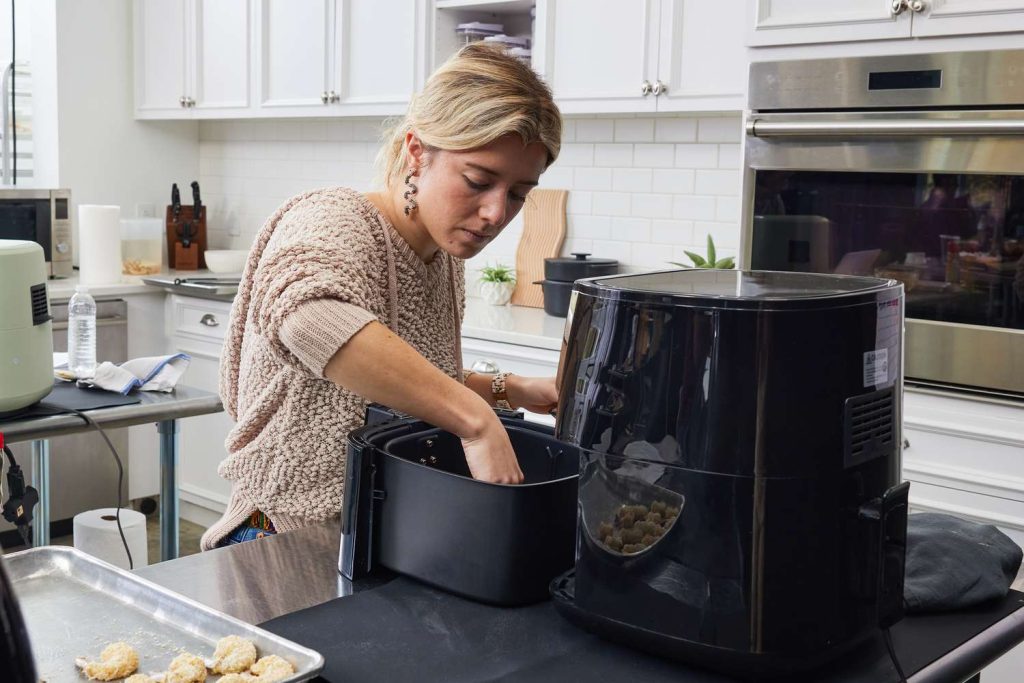
Air fryers have become a family essential because they make cooking faster, cleaner, and easier — but even the best appliance struggles when common mistakes get in the way. Small habits like overcrowding, skipping preheat, or using the wrong oil can turn crispy meals into soggy frustration. This guide breaks down the 12 most common air fryer mistakes people make, why they happen, and simple fixes that guarantee better results every time.
Whether you’re meal-prepping for the week or preparing quick dinners for your family, these tips will help you reduce mess, avoid smoke, and get that golden, even crisp you expect. I’ve also included helpful internal links to LOYH guides like how to clean your air fryer properly and easy air fryer recipes if you’re ready to upgrade your weekly meals.
In this guide:
- Overcrowding the Basket
- Not Preheating Properly
- Using Too Much or the Wrong Oil
- Skipping the Mid-Cook Shake
- Adding Wet Batters or Sauces
- Not Cleaning the Air Fryer Regularly
- Using Aerosol Sprays
- Wrong Accessories
- Ignoring Smoke or Odors
- Not Adjusting Oven Recipes
- Relying on Presets for Everything
- Incorrect Storage & Operation
1
Overcrowding the Basket
Overcrowding is easily the most common air fryer mistake. When food overlaps or piles up, hot air can’t reach every surface, causing uneven browning and soggy textures. This is especially common with fries, vegetables, and breaded proteins that need airflow on all sides.
Instead of crisping, the food steams — leaving you with pale edges, mushy centers, and underwhelming results. Even high-end air fryers can’t overcome poor air circulation. A good rule of thumb is to treat the basket like a mini-oven: space matters.
For families cooking bigger batches, a dual-basket model (like the ones we compare in our best air fryers for family meals) can reduce overcrowding without extra cook cycles.
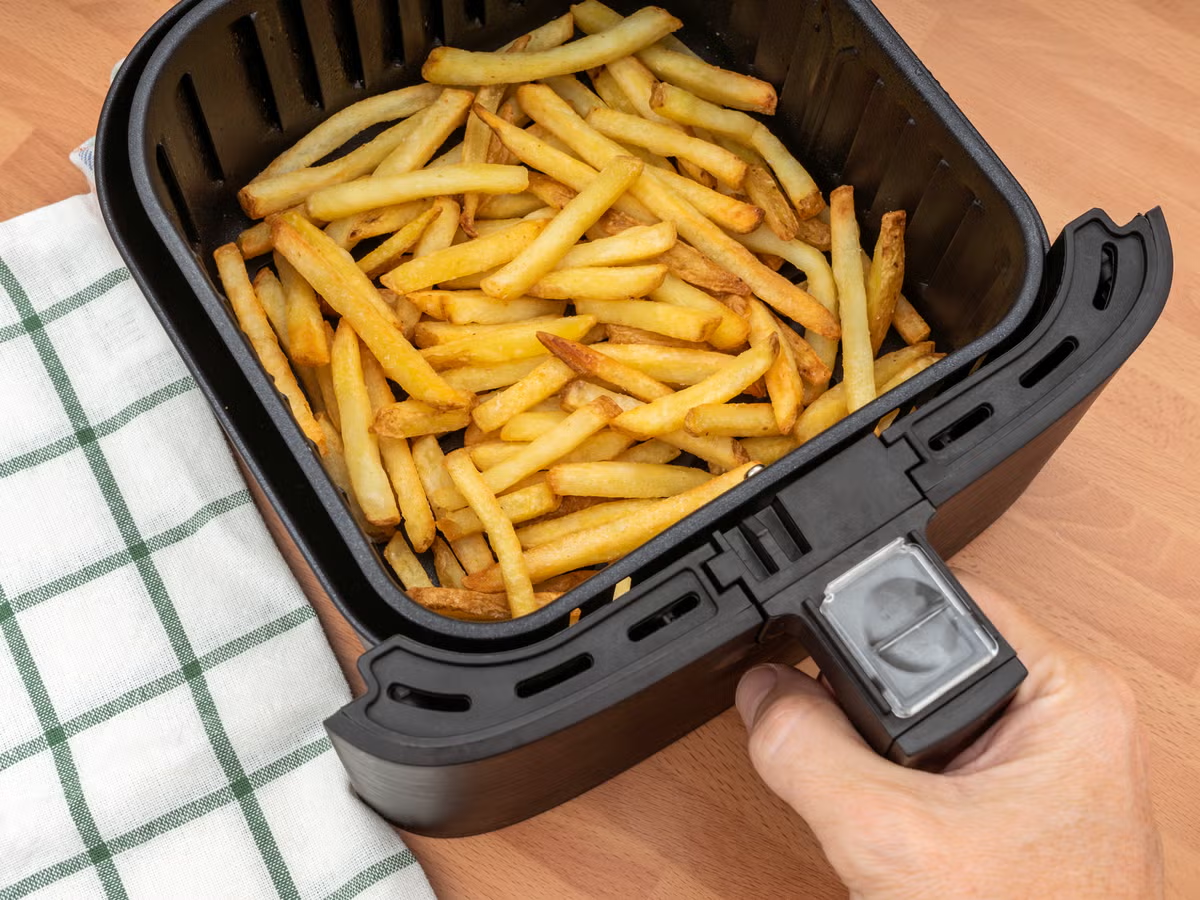
Quick Fix: Keep portions to a single layer when possible or no more than 65% full. Cook in two quick batches for perfectly crisp textures.
2
Not Preheating the Air Fryer
Most people skip preheating because air fryers heat quickly — but this shortcut changes everything. Preheating ensures food hits a hot surface immediately, which produces a crispier exterior and prevents soggy breading.
Frozen foods, breaded proteins, and vegetables especially benefit from preheat. Without it, food warms slowly, releasing moisture before browning begins. You lose that instant sizzle that creates crunch.
Many recipes inside our best air fryer recipes guide recommend preheating for exactly this reason — reliability.
Quick Fix: Preheat 3–5 minutes for most foods, or until your model’s indicator light turns on.
3
Using Too Much or the Wrong Oil
A tablespoon of oil in an oven is one thing — but even a teaspoon too much inside an air fryer can cause smoking, bitterness, or soggy textures. Oil tends to pool in the bottom tray and burns against the heating element.
The type of oil matters too. Low smoke-point oils (like extra-virgin olive oil) degrade quickly under high heat, producing burnt flavors. High-smoke-point oils perform far better.
For even coating, a refillable mister works beautifully. You’ll see this technique in many recipes within our air fryer recipes guide — a light spray goes a long way.
Quick Fix: Use avocado, grapeseed, or light olive oil. Mist lightly instead of pouring.
4
Skipping the Mid-Cook Shake or Flip
The mid-cook shake is not optional — it’s a secret weapon for even browning. Air fryers don’t operate like static ovens; they rely on circulation. When food stays in one position, one side gets more heat exposure than the other.
Shaking is especially important for fries, diced vegetables, and nuggets. Larger pieces like chicken thighs or tofu slabs benefit from a flip instead of a shake.
If you’re cooking multiple foods at once, shaking helps re-distribute oils and seasoning for a balanced result.
Quick Fix: Shake once halfway through short recipes; flip larger cuts at least once for even crisping.
5
Adding Wet Batters or Sauces Directly
Air fryers are not deep fryers — wet batters drip through the basket and burn onto the heating element. The result? Smoke, burnt smells, and a sticky mess that’s extremely difficult to remove.
Sugary sauces burn fast too, leaving blackened patches and affecting the taste of your next several meals. Even sweet chili or honey BBQ can scorch within minutes.
If you love saucy meals, the best technique is to cook the protein in the air fryer first, then add the sauce during the final minutes so it caramelizes without burning. This method is also recommended in our small kitchen appliances guide because it keeps your air fryer clean while giving glazes a perfect finish.
Quick Fix: Use breaded coatings, par-cook wet batters first, and add sweet sauces only during the last 2–3 minutes.
6
Not Cleaning the Air Fryer Regularly
I get it — cleaning after cooking isn’t fun. But neglecting your air fryer leads to smoke, bitter flavors, and buildup that can reduce the appliance’s lifespan. Food crumbs and grease burn under the coil, affecting every meal afterward.
Most baskets need a quick rinse or wipe after every use and a proper deep clean every few uses. Even small crumbs can ruin the smell of your next batch of fries.
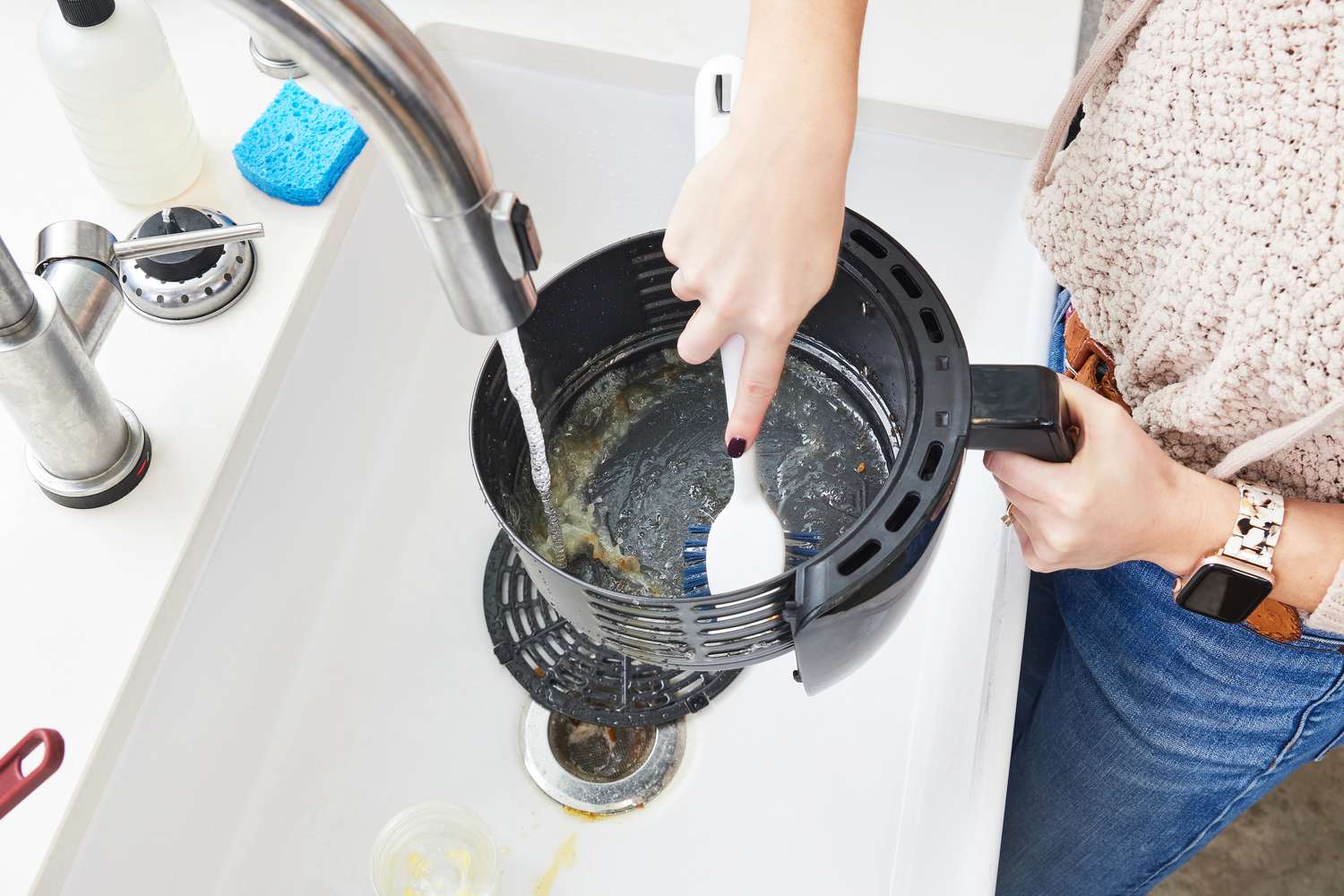
For step-by-step cleaning instructions, check our guide on how to properly clean your air fryer — it’s one of the most referenced tutorials on the site.
Quick Fix: Wipe after every use, deep clean weekly or after heavy meals, and always keep the coil area free from stuck crumbs.
7
Using Aerosol Sprays in the Basket
Aerosol sprays may seem like the quickest way to apply oil, but they contain additives that cling to nonstick coatings and eventually damage them. Over time, this sticky film makes food more likely to stick and causes discoloration in the corners of the basket. Even worse, some sprays include propellants that burn at high temperatures and leave behind bitter residues.
Instead, a refillable oil mister gives a clean, even coating using high-quality oils that won’t damage the coating. This keeps your basket smooth, extends its lifespan, and improves the crispiness of fries, chicken, and roasted veggies.
Quick Fix: Replace aerosol sprays with a reusable mister filled with avocado, grapeseed, or light olive oil.
8
Using the Wrong Accessories or Materials
Accessories can make air frying easier, but only when used correctly. Thick silicone molds, oversized pans, or generic inserts from unverified brands often restrict airflow and reduce browning. Some materials aren’t designed for 400°F heat and can melt, warp, or release odors that cling to food.
If you regularly use accessories, choosing pieces designed with ventilation and high-heat stability in mind makes a big difference. Perforated metal trays, high-temperature silicone liners, and oven-safe racks help food crisp properly while containing drips.
To keep your air fryer accessories organized and easy to reach, see our guide on organizing small kitchen counter space.
Quick Fix: Use only oven-safe, air-fryer-rated accessories and avoid inserts that block air circulation.
9
Ignoring Smoke, Odors, or Strange Noises
Mild smells are normal when cooking certain foods, but smoke or burnt odors nearly always indicate leftover grease or crumbs burning beneath the heating element. As residue heats repeatedly, it carbonizes, producing bitter aromas and affecting the taste of everything cooked afterward.
Rattling or buzzing sounds can signal loose components or accessories vibrating against the inner walls. In rare cases, it may indicate a bent tray or fan imbalance.
To keep your air fryer running smoothly and smelling fresh, try incorporating the maintenance habits in our guide on removing grease from kitchen appliances.
Quick Fix: Pause cooking immediately if you notice smoke. Clean the tray, basket, and coil area before restarting.
10
Not Adjusting Oven Recipes for Air Fryer Use
Air fryers operate much faster and hotter than ovens because of their compact cooking chambers. Using oven instructions directly often results in food that’s burnt on the outside and undercooked inside, especially with breaded chicken, casseroles, or thick vegetables.
Once you understand how your unit distributes heat, adjusting oven recipes becomes second nature. Foods that take 20–25 minutes in the oven often finish in 12–15 minutes in the air fryer.
For more helpful home-appliance tips, check our guide on choosing and maintaining kitchen appliances.
Quick Fix: Lower oven temperatures by 25–50°F and shorten the cooking time by roughly 25%.
11
Relying on Presets for Everything
Presets are convenient, but they’re based on approximate averages. Your air fryer might run hotter or cooler than the model used to create the preset — and your food may not match the thickness, size, or moisture levels the preset assumes.
Over time, relying heavily on presets leads to inconsistent results. Thin foods may overcook, while dense cuts may remain underdone in the center.
Instead, think of presets as starting points. With experience, you’ll learn the exact timing and adjustments your model needs. Our readers find that checking food a few minutes early is one of the most reliable habits for consistent crispiness.
If you’re exploring complementary appliances, our guide to the best toaster ovens for quick breakfasts offers options with smarter presets and hybrid functions.
Quick Fix: Treat presets as suggestions, not instructions. Always check food a bit early.
12
Incorrect Storage & Operation Habits
Air fryers need proper ventilation to operate safely. When used beneath low cabinets or pushed tightly against a wall, the hot air and steam have nowhere to disperse. This causes overheating, warping, and slower cooking times. Some families also store the appliance while it’s still slightly warm, trapping moisture inside.
Moisture buildup leads to odors, peeling interiors, and shorter appliance lifespan. Oils and crumbs inside the base can also attract bacteria if not cleaned regularly, especially if the appliance is stored without thorough drying.
Creating a dedicated space with airflow helps your air fryer run consistently for years. For more space-saving tips, see our guide on warming drawers and small-kitchen storage options.
Quick Fix: Leave at least 5 inches of clearance around all sides and let the unit cool fully before storing.
Extra Tip: Want to take your air-frying up another level? These helpful guides give you more control, better flavor, and cleaner cooking routines:
Troubleshooting & Pro Tips
Before assuming your air fryer is faulty, try these quick fixes. Many issues come from food placement, residue buildup, or small technique errors that are easy to correct. These simple habits create huge improvements in crispiness and consistency.
✔ Good Practices
- Clean the basket and tray after every use
- Shake or flip food halfway through cooking
- Use high-smoke-point oils only
- Keep foods in single, spaced layers
- Give the unit open airflow while running
✘ Avoid These
- Aerosol sprays inside the basket
- Adding wet batters directly
- Allowing grease to burn repeatedly
- Trusting presets without checking
- Operating the unit in tight spaces
Air fryers can transform everyday cooking, especially when used with the right habits. By avoiding these common mistakes and sticking to a few smart, repeatable techniques, you’ll get crispier textures, juicier centers, and cleaner operation every single time.
If you’d like even more inspiration, here’s a fantastic list of essential air fryer recipes from Allrecipes that offer fresh ideas for weeknight meals.
Amazon and the Amazon logo are trademarks of Amazon.com, Inc, or its affiliates.

