

Countertop Dishwasher Not Draining Properly
As an Amazon Associate I earn from qualifying purchases.
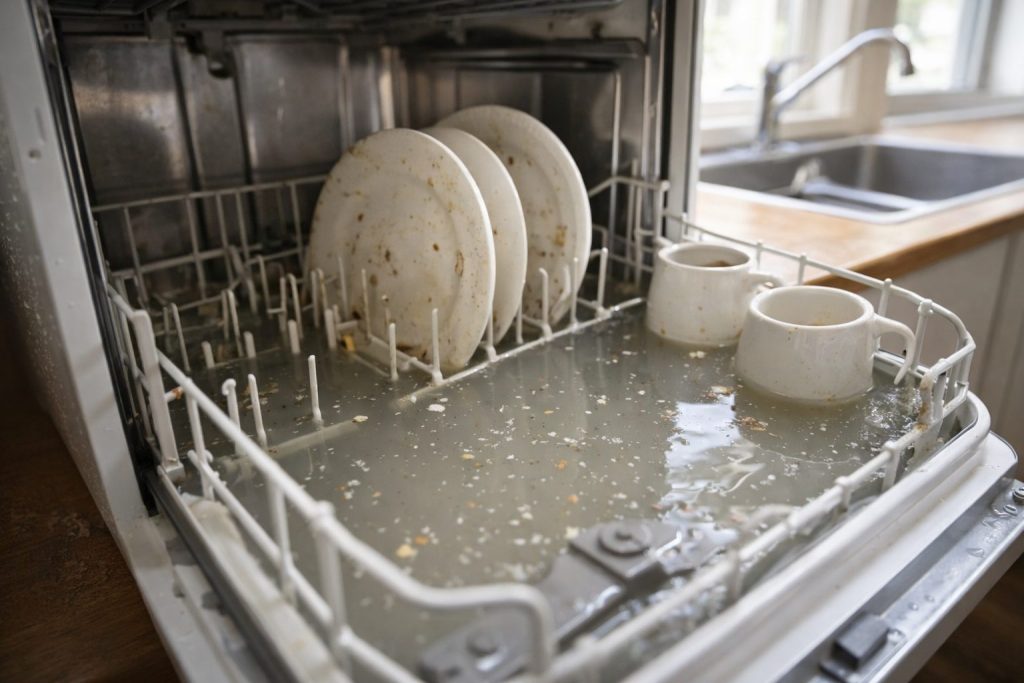
It’s frustrating to open your countertop dishwasher and find standing water sitting at the bottom after a cycle finishes. The dishes may be clean, but the water hasn’t drained, and now you’re left wondering whether something serious has gone wrong.
In most cases, a countertop dishwasher not draining properly isn’t a total failure. Compact units rely on narrow drain paths and small pumps, which makes them more sensitive to clogs, grease buildup, and hose positioning issues.
This guide walks through the most common reasons drainage problems happen, what you can safely check at home, and when it makes more sense to repair or replace the unit.
In this guide
Why Standing Water Happens
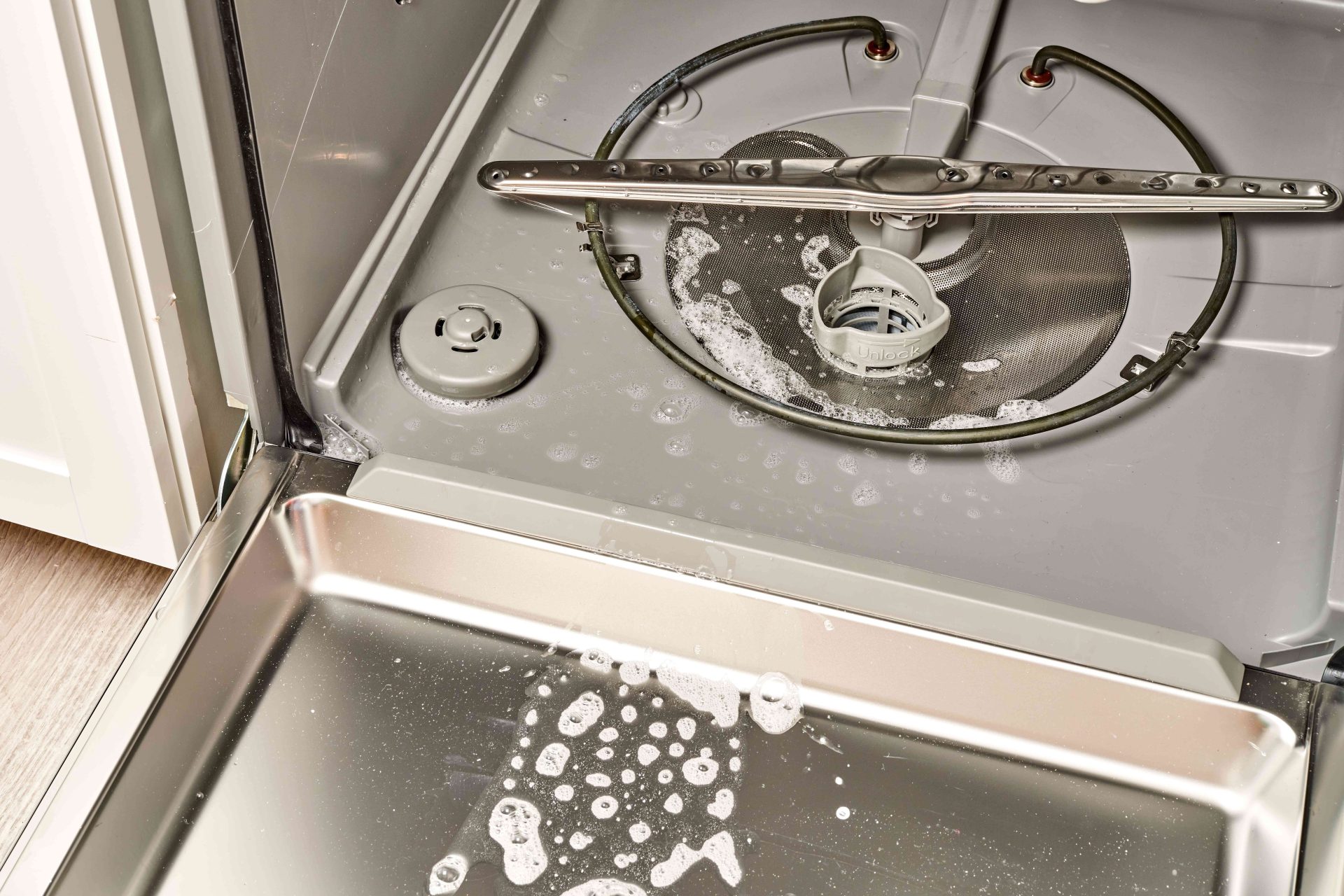
A countertop dishwasher drains water using a small internal pump that pushes used water through a narrow hose and into your sink drain. If that path is blocked, restricted, or improperly positioned, water can remain at the bottom of the unit after the cycle finishes.
Unlike full-sized dishwashers, compact models rely on tighter internal channels and smaller drainage components. That makes them more sensitive to small clogs, grease buildup, and minor hose positioning issues.
Standing water does not automatically mean the appliance has failed. In many cases, the pump is still functioning, but something along the drain route is slowing or preventing proper flow.
Understanding that drainage depends on both internal components and external setup makes troubleshooting much more straightforward. Most issues fall into a handful of predictable categories.
Simple Checks Before You Panic
Before assuming a major mechanical issue, start with a few basic checks. Many drainage problems are caused by simple setup or maintenance oversights rather than failed components.
Always unplug the dishwasher before inspecting internal components, removing filters, or adjusting the drain hose.
First, confirm that the wash cycle completed fully. Interruptions or power fluctuations can stop the drain phase before it runs.
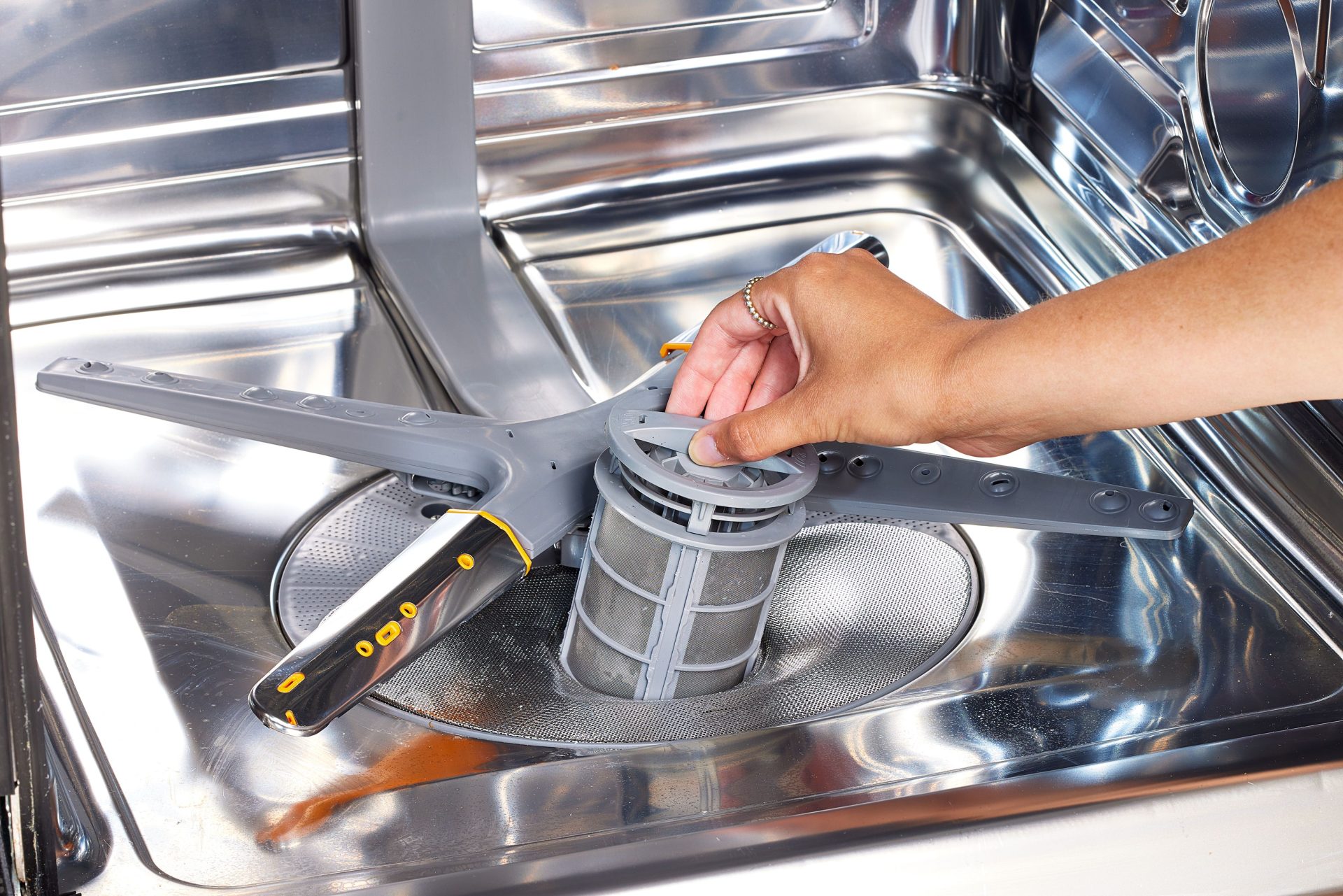
Next, inspect the filter at the bottom of the unit. Food debris, small labels, and grease can collect there and restrict water flow.
Also check whether the sink itself is draining properly. If the sink drain is slow or partially blocked, the dishwasher may not be able to discharge water efficiently.
These quick checks often resolve the issue without requiring deeper disassembly or repair.
How Grease and Food Buildup Block Drainage
Even when plates look mostly clean, small food particles and grease residue enter the dishwasher during every cycle. In compact units, those particles travel through narrow drain channels and small pump openings.
Grease behaves differently than loose debris. When hot, it flows easily. As it cools, it thickens and sticks to internal tubing and drain pathways. Over time, that thin layer can restrict water movement without creating a visible blockage.
Because countertop dishwashers have tighter drainage systems than full-sized models, buildup affects them more quickly. What might take years to clog a larger machine can slow drainage in a compact unit much sooner.
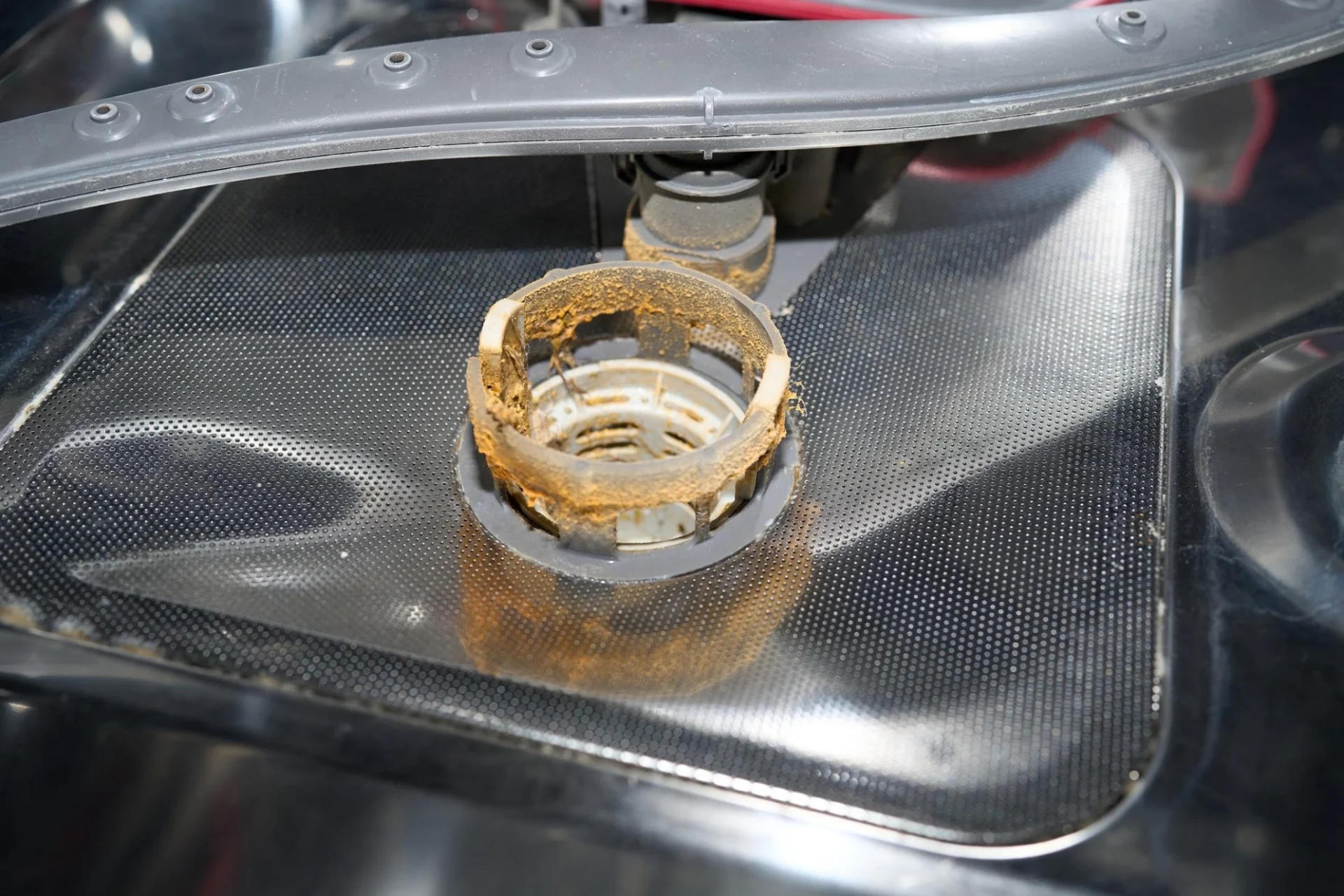
If you’ve ever noticed slow draining along with a greasy interior film, the two are often connected. A deeper look at how grease accumulates in kitchen appliances helps explain why drainage performance declines over time. Our guide on cleaning grease from kitchen appliances explains how buildup forms and why regular cleaning prevents long-term clogs.
Drain Hose Positioning Problems
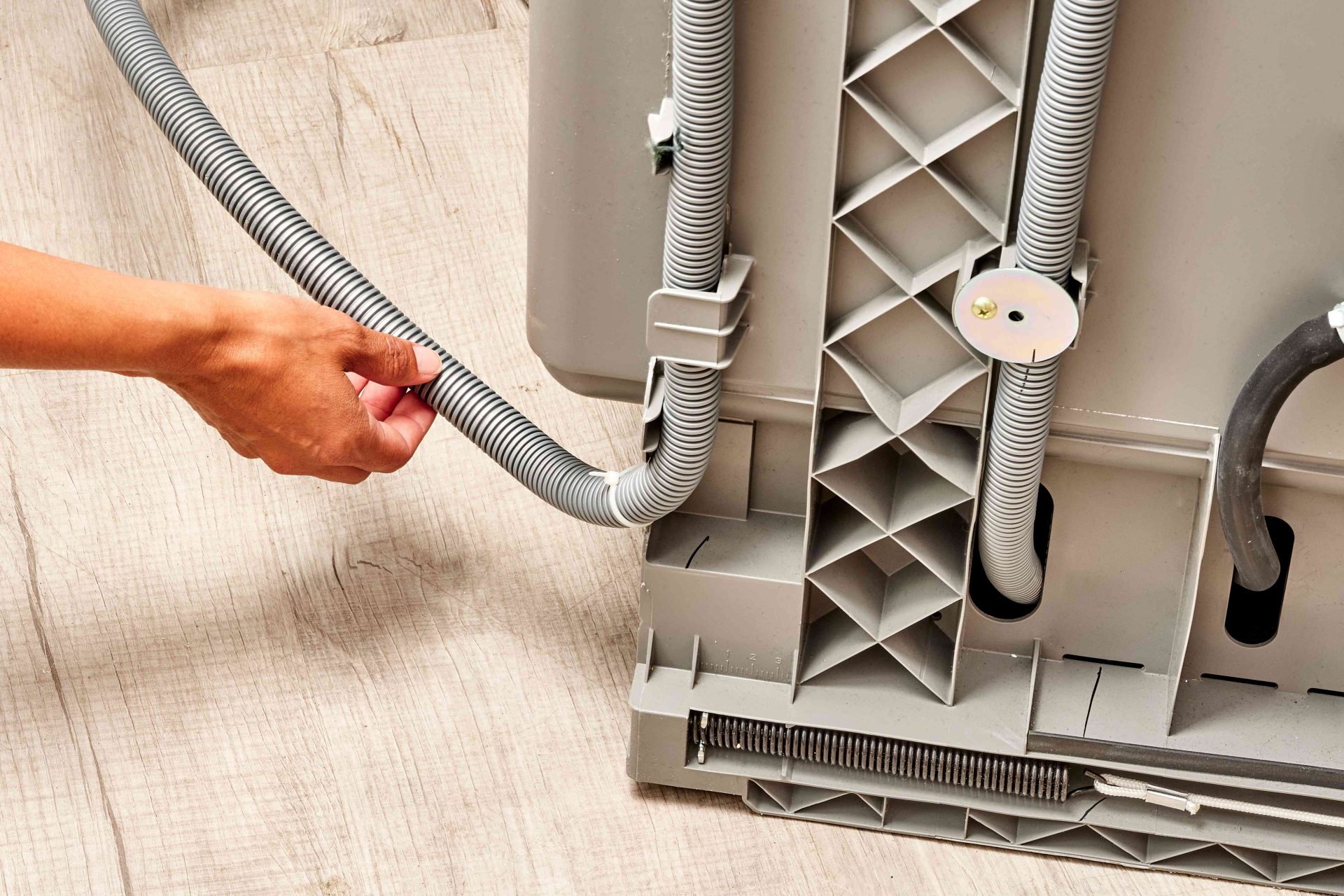
Countertop dishwashers depend heavily on proper hose positioning. Because they drain directly into a sink or disposal connection, even small placement errors can prevent water from exiting correctly.
Incorrect Height
If the drain hose sits too low, water can flow back into the dishwasher after the pump stops. This creates the appearance of standing water even though the unit initially drained.
Kinked or Pinched Hose
Compact kitchens often mean tight cabinet space. A hose that bends sharply behind the unit or gets pressed against a wall can partially restrict water flow. Over time, even a small pinch can slow drainage significantly.
Improper Sink Connection
If the hose connects loosely or without proper elevation to the sink drain, gravity may not assist the pump efficiently. Ensuring the hose runs upward slightly before descending into the drain can improve consistent flow.
When It Might Be the Pump or Filter
If you hear grinding noises, smell burning, or notice water leaking underneath the unit, stop using the dishwasher immediately and disconnect it from power before further inspection.
If basic checks and hose adjustments don’t resolve the issue, the problem may involve the drain pump or internal filter assembly.
A failing pump often produces a humming sound without actually moving water. In some cases, you may hear a brief attempt to drain followed by silence while water remains in the basin.
The internal filter can also become clogged beyond what surface cleaning removes. Fine debris or grease can lodge deeper inside the drainage chamber, preventing full water evacuation.
At this stage, disassembly may be required. For many countertop models, accessing the pump area is not always straightforward and may not be cost-effective compared to replacement.
When Repair Stops Making Sense
Not every drainage problem justifies repair. Countertop dishwashers are compact, and replacement parts such as drain pumps can approach a significant portion of the appliance’s total cost.
If the unit is several years old and has experienced repeated drainage issues, investing in parts and labor may not provide long-term reliability. Compact pumps and narrow drainage systems are more vulnerable to wear compared to full-sized models.
Another factor is accessibility. Some countertop units are not designed for easy internal servicing, which can increase labor costs or require specialized repair.
If you’ve exhausted cleaning, hose adjustments, and basic diagnostics without consistent results, it may be worth comparing the cost of repair against newer, more efficient models. Our guide to the best compact dishwashers for small homes can help you evaluate whether replacement makes more practical sense.
How to Prevent Drainage Problems
Once drainage is restored, small maintenance habits can prevent the issue from returning. Compact dishwashers rely on narrow drain paths, so consistency matters more than intensity.
Rinse Before Loading
Removing large food particles before placing dishes inside reduces the amount of debris entering the filter and drain channel. Even a quick rinse can make a noticeable difference over time.
Keep the Hose Properly Elevated
Ensure the drain hose rises slightly before descending into the sink drain. This positioning helps prevent backflow and supports consistent water discharge. Improper storage or hose placement can gradually lead to drainage issues, especially in small kitchens where appliances are frequently moved. Our guide on how to store kitchen appliances smartly explains how positioning affects performance.
Avoid Heavy Grease Loads
Excess grease can solidify inside narrow drainage tubing. Running occasional empty hot-water cycles or using appropriate cleaning solutions can help reduce buildup.
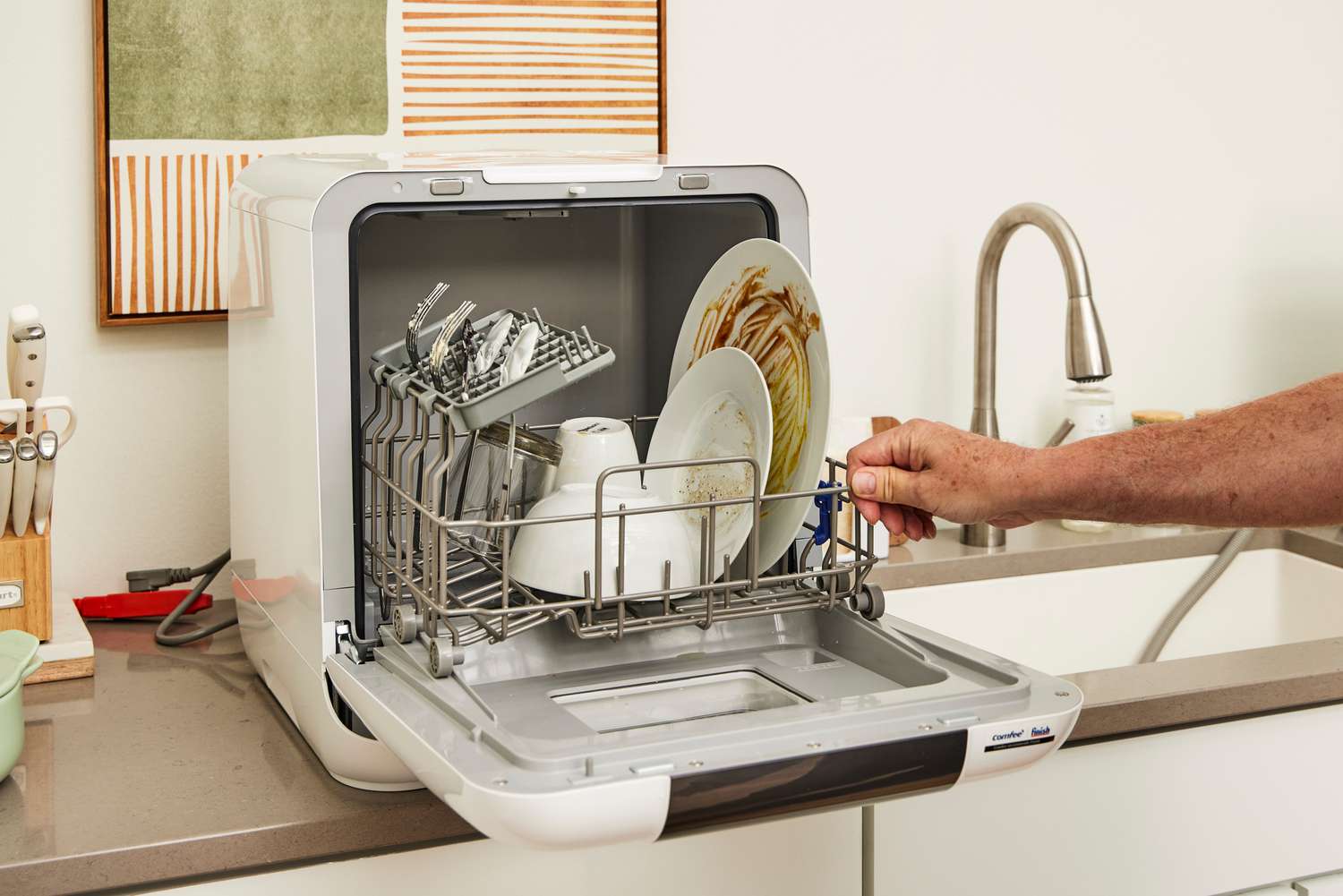
Compact dishwashers have smaller drain pathways than full-sized models. Small preventive habits make a larger impact on long-term performance.
If you still have questions about drainage issues, the answers below cover the most common concerns homeowners face.
FAQs
Why is there standing water in my countertop dishwasher?
Standing water usually indicates a blockage or restriction in the drain path. This can be caused by a clogged filter, grease buildup, a kinked drain hose, or improper hose positioning rather than a complete mechanical failure.
Can I run the dishwasher again if it didn’t drain?
You can run another cycle if the issue was caused by an interrupted program. However, if water remains after multiple cycles, repeating the wash may not resolve the blockage and could strain the pump.
How do I know if the drain pump is broken?
A faulty drain pump may produce a humming sound without moving water, fail to activate at all, or repeatedly leave water behind despite clear filters and hoses. Grinding noises or burning smells require immediate disconnection from power.
Is grease really enough to block a small dishwasher?
Yes. Grease can solidify inside narrow drain channels and restrict water flow over time. Compact dishwashers are especially sensitive because their internal pathways are smaller than full-sized units.
Should I repair or replace a countertop dishwasher that won’t drain?
If the appliance is older and the pump or internal components require replacement, repair costs may approach the price of a new unit. After basic troubleshooting steps are exhausted, replacement can sometimes be the more practical option.
Amazon and the Amazon logo are trademarks of Amazon.com, Inc, or its affiliates.