Yes, you can reuse frying oil, but not forever and not carelessly. How many times depends on what you fried and how well you strain it. This guide pulls together a real kitchen test, a baking site, a fryer manufacturer’s manual and a restaurant supplier, and points out where they disagree.
For breaded or battered foods, plan on 3 to 4 uses with the oil strained after each. Chips and plain fries can go longer. Stop if the oil is dark, foams, smokes early or smells off, and never pour it down the drain.
In this guide
What each source says
| Source | Reuse guidance |
|---|---|
| America’s Test Kitchen (2019 test, canola oil) | Fried chicken fine through 4 uses, greasy after the 5th; chips identical through 8 batches |
| King Arthur Baking (2023) | Two to eight times depending on oil, food and straining |
| Hamilton Beach deep fryer manual (model 35000 / DF14) | Oil for fries 3 to 5 times if filtered each time; no longer than six months |
| WebstaurantStore (2026, restaurant supplier) | Most restaurants 3 to 5 uses; 5 to 7 with good filtration |
The ranges overlap but do not match. The restaurant supplier is writing for commercial kitchens, so we weight the home test and the fryer manual more heavily.
How many times in practice
America’s Test Kitchen strained 2 quarts of canola oil after each fry and tested it. Fried chicken tasted fine through four uses, then greasy with off flavors after the fifth. Potato chips came out identical through eight batches, when they stopped testing, and they said chips could go at least eight times and likely far longer if topped up with fresh oil. Their advice for breaded and battered foods is three or four uses.
Breading leaves crumbs and moisture in the oil, which is why those foods wear it out faster than plain potatoes. If you only fry a handful of fries at a time in a small unit such as the Presto FryDaddy, the oil sees less food per batch, but Presto does not publish reuse guidance, so use the signs below to decide.
Cool, strain and store
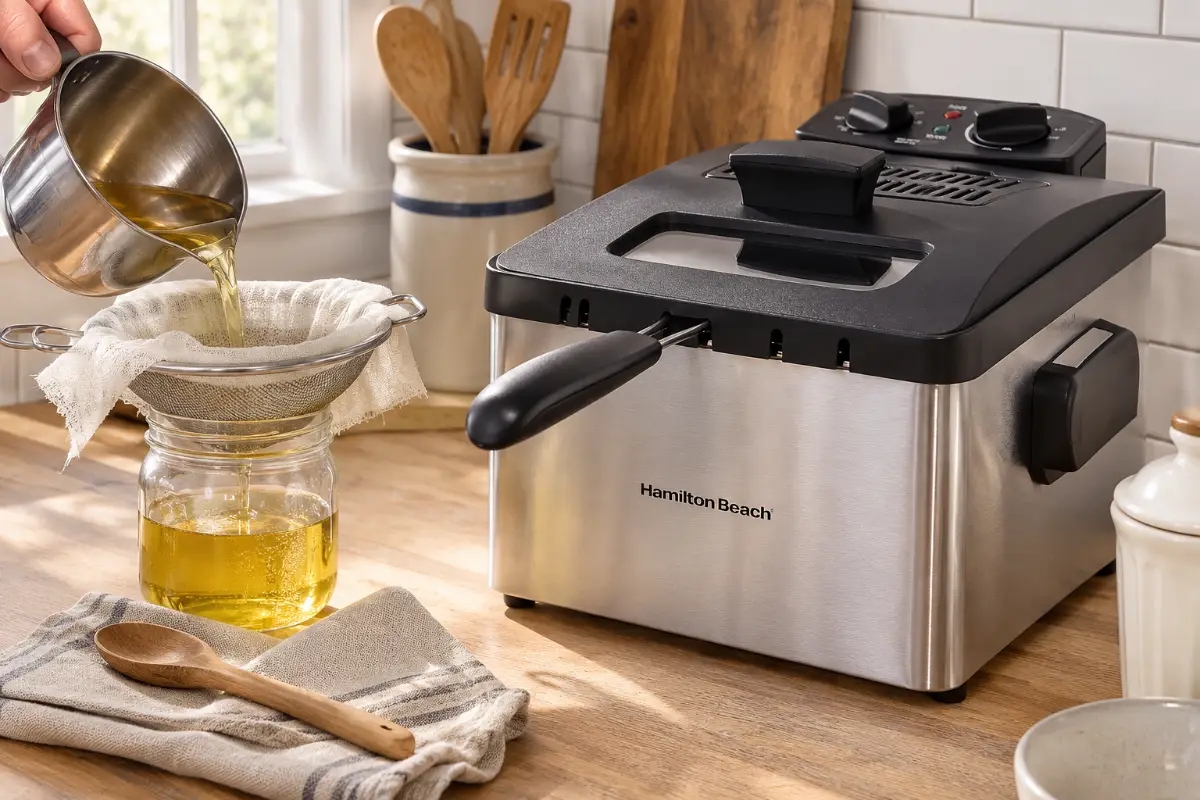
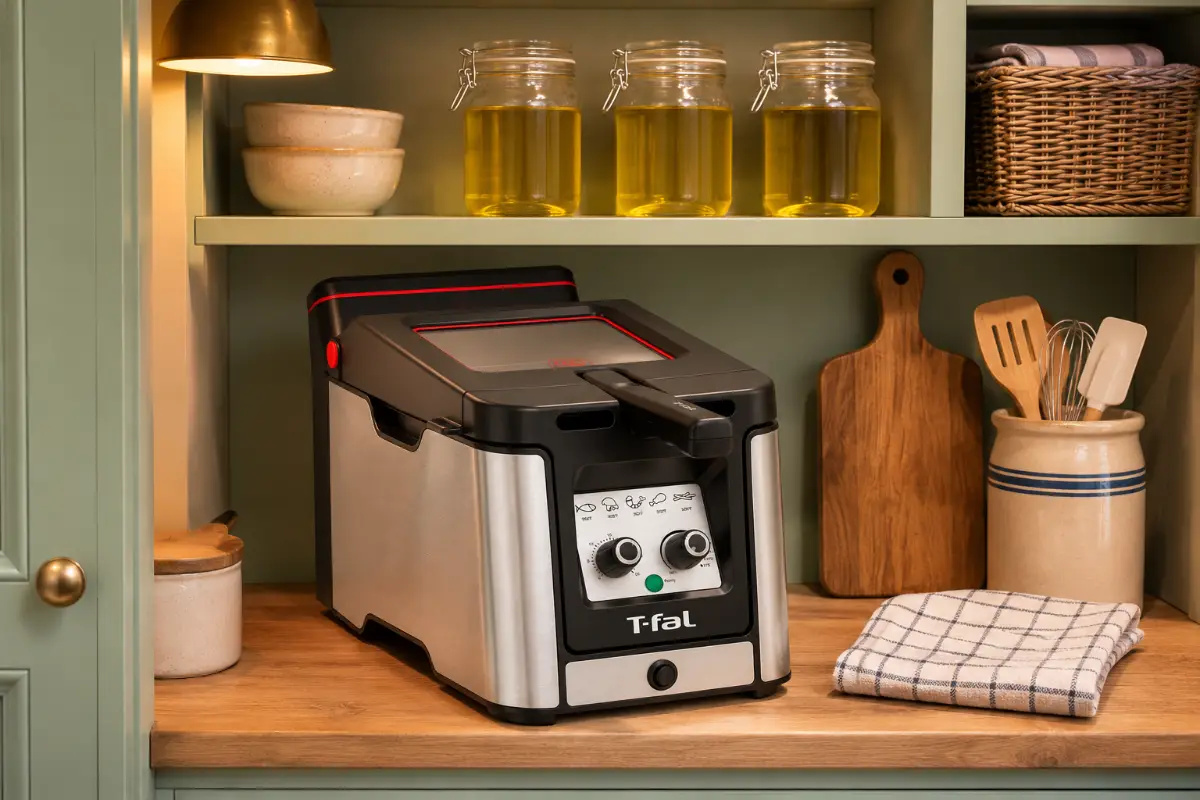
King Arthur’s method is simple. Let the oil cool completely in the pot, strain it through cheesecloth set in a fine-mesh strainer into a clean container using a funnel, and store it in a lidded container in a cool, dark place. Label the jar with the date, what you fried and how many times it has been used. A restaurant supplier says to cool oil below 100 degrees Fahrenheit before handling it.
Storage times vary by source. The supplier cites 1 to 2 months under ideal conditions, while the Hamilton Beach manual says not to keep oil longer than six months. The manual also says not to use refrigerated oil. We would go with the shorter time and use a fryer-specific manual as the final word. The supplier also advises never to mix old and new oil.
Signs the oil is done
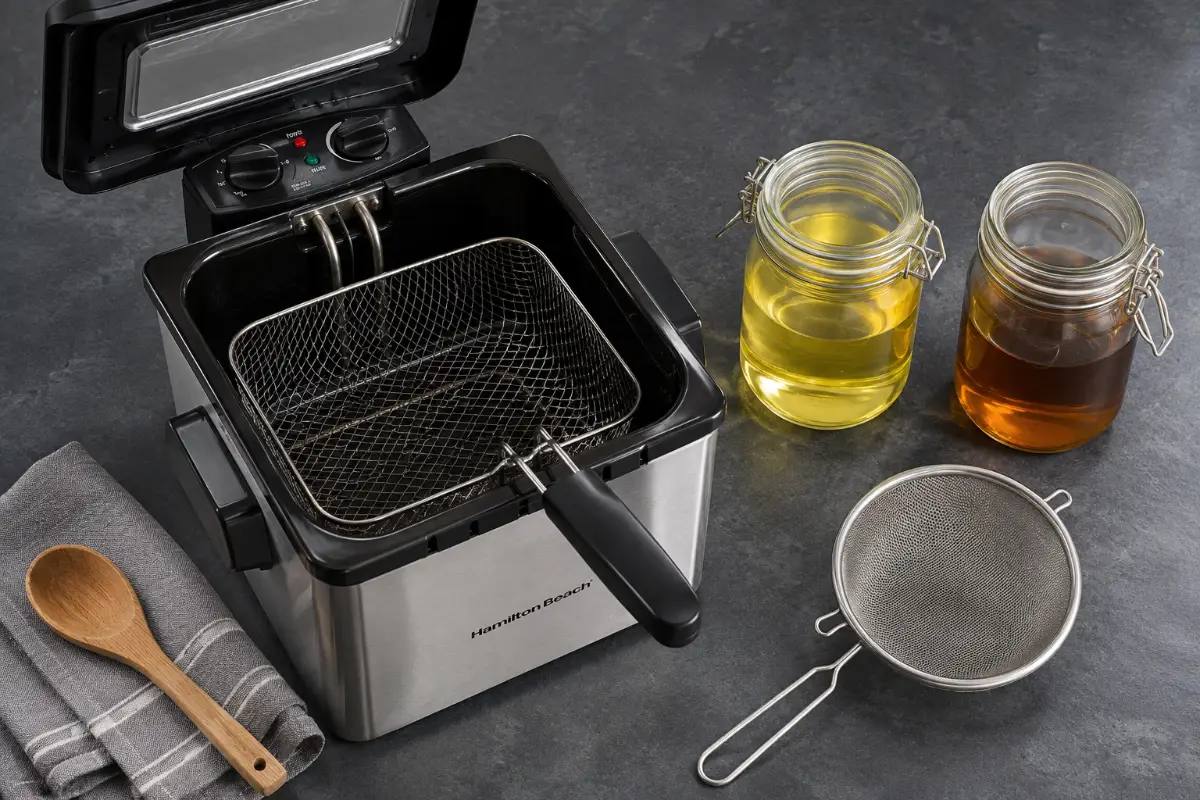
King Arthur lists the signs: oil that is dark or dirty, oil that smokes before it reaches frying temperature or foams at the top, and a rancid or musty smell. The Hamilton Beach manual adds a strong smell or taste and oil that turns syrupy. If you see any of these, replace the oil instead of topping it up.
Oil type and smoke point
An Oklahoma State extension fact sheet puts the smoke point of peanut oil at about 226 to 230 degrees Celsius (roughly 440 degrees Fahrenheit), and says regulations treat 200 degrees Celsius as the minimum for frying oils. A restaurant supplier lists peanut oil at 425 to 450 degrees Fahrenheit, which agrees closely. No matching home test exists for other oils, so they are not ranked here. Pick an oil whose label gives a smoke point comfortably above your fryer’s temperature, and expect oils to break down faster the closer you run to it.
Throwing it away
New York City’s environmental agency says to pour cooled oil and grease into a container, seal it and discard it with regular garbage, and never to pour it down the kitchen sink, toilet or any drain, because it clogs pipes and can cause sewage backups. Wipe greasy pans with a paper towel before washing. King Arthur also points to oil recyclers and solidifying products. For cleaning the fryer afterward, see our guide to cleaning grease from kitchen appliances.
FAQ
How many times can you reuse frying oil?
It depends on the oil, the food and how well you strain it. America’s Test Kitchen found canola oil gave good fried chicken through four uses and chips through at least eight. King Arthur says two to eight times, a Hamilton Beach fryer manual says 3 to 5 times for fries if the oil is filtered each time, and a restaurant supplier says most kitchens get 3 to 5 uses, up to 7 with good filtering. A safe home rule is 3 to 4 uses for breaded foods and to stop sooner if you see warning signs.
How do I know the oil has gone bad?
Throw it out if it is dark or dirty, foams when heated, smokes before reaching frying temperature, or smells rancid, musty or strong. The Hamilton Beach manual also lists oil that turns dark and syrupy.
How should I store used frying oil?
Let it cool completely, strain it through cheesecloth in a fine-mesh strainer into a clean jar, close it tightly and keep it in a cool, dark place. King Arthur suggests labeling it with the date, what you fried and how many times it has been used. A restaurant supplier cites 1 to 2 months under ideal conditions; the Hamilton Beach manual says not to keep oil longer than six months. Those figures differ, so we would use the shorter one.
Can I store the oil in the fryer?
The Hamilton Beach manual says not to use refrigerated oil. Presto does not publish storage guidance for the FryDaddy, so check your own manual.
Can I mix old oil with fresh oil?
The restaurant supplier we read says never to mix old and new oil. America’s Test Kitchen did note that chips could go much longer when replenished with fresh oil, so topping up is a judgment call; if the old oil is already dark or smells, start fresh.
How do I throw away used oil?
Cool it, pour it into a container that seals, and put it in the regular trash. New York City’s environmental agency says never to pour it down the sink, toilet or any drain because it clogs pipes and can back up sewers. Some areas also have recycling programs.
Does the type of oil matter?
Yes for heat. An Oklahoma State extension fact sheet puts peanut oil’s smoke point at about 226 to 230 degrees Celsius, well above the 200-degree minimum it cites for frying oils. Oils with lower smoke points break down faster at frying temperature.